

MANDARIN COURSES
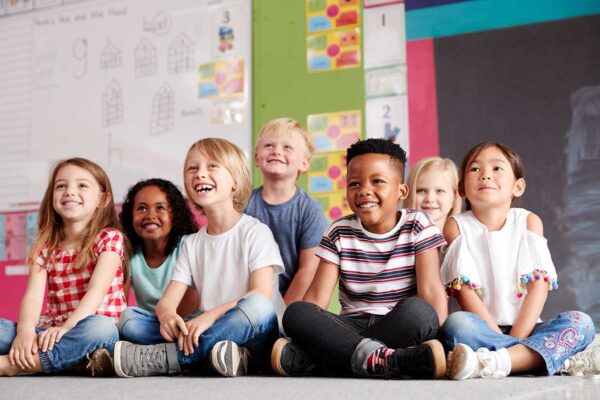
Elementary
Students with little to no previous exposure to Mandarin Chinese could join one of our beginner groups. The power to learn language is so great in the young child that it doesn't seem to matter how many languages you expose them to: they can learn many spoken languages if they hear systematically and regularly at the same time.
Students are grouped based on their abilities, previous exposure to the language if any, age/grade and level of maturity.
As they progress, students seamlessly progress to the next level. We have fourteen different sub-levels.
All four pillars of language learning are taught with more emphasis on vocabulary acquisition and phonetic exercises at the beginning. As the students grow into a good hand and eye coordination, the percent of writing exercises is increased. Our approach could be different from a group to another as we do not believe in one size fist all.
Besides text-books, exercise-books and audio, we also use TPRS (Teaching Proficiency through Reading and Storytelling), songs, interactive games and cooking sessions to reinforce our curricula.
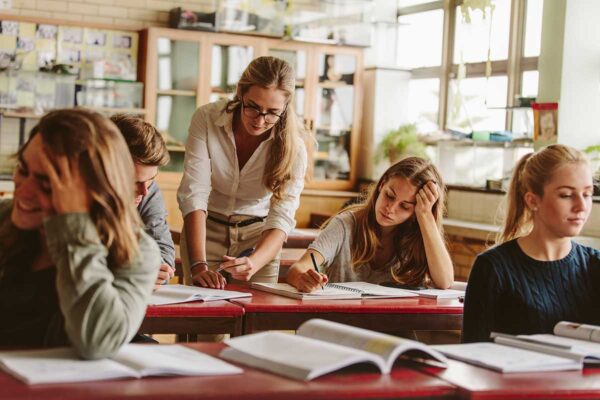
Pre-Teens and Teens
Students are first assessed on their previous knowledge of Mandarin Chinese if any. So, if they were exposed formally and/or informally then goals are set to reach the next level (using our internal curricula or the one used according to the California Standards, the common core curriculum applied by European Communities and or internal curricula specifically designed around our Mandarin Chinese learners needs.
Our teens will have access - with their login and password - to a Mandarin Chinese digital book. They will listen to videos by native Mandarin Chinese speakers, read simple sentences then stories, record their voices (allowing the instructors to correct any sounds or combinations of sounds). In short our curricula includes but are not restricted to: (a) Grammar and sentence structures; (b) Conversation skills through role-play; (c) Language history; (d) Conjugation; (e) Vocabulary acquisition developed through games and interactive plays in order to memorize vocabulary; (f) phonetic exercises; (g) reading and comprehension through TPRS; (h) Listening and understanding through videos (MP4), sound tracks and songs (MP3).
For those interested preparing for the AP classes or the DELF exams, we also offer test preparation.

Adults
Classes for adults are tailored to meet the students expectations. Learning acquisition is established around themes of interest. Classes are held early afternoons or evenings.
Several levels from beginner to advanced are proposed at different time of the year and are generally organized in session of 10 classes at a frequency of once or twice a week.
For those who were exposed either formally or informally to French, they will need to be assessed first in order to assign them to a small group of French learners that will best fits their needs.
In our group classes we generally emphasis on oral skills by the use of of dialogues and role plays, we also honor the three other pillars of the language learning by working on the written, grammatical and cultural skills. The percentage of time for each pillar depend on the members of the class.
Accelerated or intensive classes are also proposed. Because our Academy does not have an I-20 program, foreign students will be required to comply with all US immigration regulations.
Languages for Travelers
Planning a trip abroad and having the desire to learn the basics necessary to make your vacation even more memorable.
Languages for MedicalWe provide classes designed specifically for Health Professionals. Lessons are centered on medical situation of choice and the necessary vocabulary and grammar are taught in context.
Some topics may include but are not restricted to:
Patient examination/Specialist consultation
Emergency procedure / Diagnosis
We provide classes designed specifically for law professionals.
Languages for Real EstateWe provide classes designed specifically for Real Estate professionals.

Corporate
Bay Language Academy has been offering its expertise in Language Training for the past five years. We offer tailored and business sessions focused to meet the needs of your employees. We offer group class trainings with business and industry focused courses. We are also open to specialized instruction. Our services are available to San Francisco Downtown area, East Bay and the Silicon Valley, at our site or through live digital classes.
We can develop a customized curriculum uniquely structured for your firm’s needs and manage the program to accommodate your employee’s scheduling needs. We will also offer essential language tools and strategies to help your team grow your business.
Instruction is available for beginning, intermediate and advanced speakers, following the ACTFL (The American Council on the Teaching of Foreign Languages) proficiency scale which has four main levels (Novice, Intermediate, Advanced, Superior). The first three levels are each subdivided into three sublevels (Low, Mid, and High).
Our instructors are native-speakers with graduate degrees from universities in the U.S. and/or foreign universities and with years of experience in the linguistic field. We welcome your questions and comments. For more information, pricing, and packages for our Corporate Program, please contact us.
Parent/Toddler
We know from the rich research available that a child is never too young to start learning a new language. So, the earlier a child starts to learn a second language, the better. The young brain is extremely capable of learning (by age two, a child has about twice as many synapses as an adult), therefore, learning during this critical developmental period is significant. According to Dr. Susan Curtiss, Professor of Linguistics at UCLA, in language development there is a window of opportunity in which the child learns a first language normally. After this period, the brain becomes slowly less plastic and by the time the child reaches adolescence, language learning is more challenging for several reasons. Studies do not seem to show any detriment to developing several languages at the same time.
.Many studies (Laurie Vasquez, 2016 ) and from the National Center for Biotechnology Information, have shown that bilingual adults have better executive brain functions than adults who only speak one language. That means bilingual adults are better able to switch focus between tasks, recall memories, and demonstrate higher-level problem-solving and planning skills. Bilingual kids demonstrate those skills, too.


TESTIMONIALS

Wonderful, thank you so much! It truly takes a village and we are so grateful for ours!
Thank you for all your time and effort, I have enjoyed my classes with you !
We are very grateful for the opportunity to have Addie learn Spanish at Bay Language Academy. Thank you !
Thank you so much for all of your and the teachers' support of the boys. It was so important for us to continue maintaining their Spanish proficiency after our move here and we very much appreciate the space for them!
I felt such an amazing connection with you and I’m pleased with my daughter's progress in French. Thank you.
We really appreciate all the incredible work you have all done with Logan and Grayson over the past years !
Thank you for all the years of wonderful support and education.
Bonjour Madame Essia,
Today I will be backpacking while French class is going so I won't be able to make it to class today. (Fritz won't either). Thank you so much for being an excellent teacher throughout COVID and I will miss having French classes every day during the summer.- Merci beaucoup! Thanks for the nice note, I am so glad to learn that Tibby is doing well in the French class as I think language is truly important to help expand our life, giving us more opportunity to connect with more people and gain more perspective, to make us more open minded and connected.Thank you for giving your heart to teach those students!
- Please thank Ms. Gracie for all of the amazing work, lessons, and support she has provided me so far. She has impacted my learning experience in such a positive way and I am extremely grateful.I wish you both all the best, and thank you again for everything!
I liked the Tuesday class and I felt it was a slightly better pace for me. I am trying to find my rhythm with an at home practice still and so a slower pace is best for me right now. I can not thank you ladies enough for listening to my concerns and being so supportive. I felt understood and cared for and I really appreciate that form you both and look forward to continuing my lessons.
Thank you for a great semester of tutoring - you were a lifesaver! The girls are now much more comfortable speaking freely in French and for the confidence they have gained, I have you to thank.
Thank you for your extraordinary leadership and support of the students during this challenging time. I really applaud you and your teachers' dedication in keeping the classes going so consistently during this prolonged shelter in place period.
Hello. Just a quick note to say that Selig is enjoying the classes so far. They are engaging and move quickly. It makes us hopeful of success. Thank you very much l! Catherine G
Loving French. Yes, to fall. Remote class works great. My son got up this morning (on a Saturday) to attend French. He wanted to read and answer more questions in French. So sweet. Love the Monday through Friday daily schedule. Keeps us all on track and regular.
Thank you for a great opportunity.- I want you to know that both of my children love their French classes.I hope that you are able to offer this format over the summer. I would very much like it. Same for the fall next year as I believe the schools are going to be on split schedules. Even if you need to change the time of day....the daily 30-min with homework works great from our perspective.
- Thank you for all of your efforts developing the new protocols that are required for the upcoming school year. I know it has been a tremendously difficult undertaking for you and the teachers.Nicole and I would still like to have the Kids attend the Bay Language Academy next year. We are nervous about the in person classes, as additional classes and students means additional risk of contracting COVID. I imagine that many parents are in a similar mindset. However, we felt that the distance learning was very effective for the kids, particularly after you switched to the 5-day per week, 30-minute per session format.We are most interested in the remote learning options that will be available to the kids next year.
I want to thank you and let you know that Alaia is loving Bay Language Academy Camp. She had really missed interaction with kids and teachers. She is just loving it. She absolutely loves art, and comes home so excited. I hope she has been well behaved and a good listener.
You have a wonderful language program and aftercare set up. We are really excited for our daughter to participate in your programs.
J'ai été accepté, Mme Essia ! J'ai rejoint la Sorbonne dans le cours de lettres, j’ai été accepté en deux, mais je vais choisir Lettres Classiques ! Rien de tout n'aurait été possible sans votre aide pour le DELF! Merci beaucoup beaucoup !!
I will highly recommend your Language Academy to anyone!
We appreciate the foundation you laid for her language skills. Sincerely
Thanks as always for your help and the great learning experience!
Warmly,Sorry for the delay. The courses are great!
We have looked at several after school programs and really feel he would do best with you. You've created an amazing space to learn and grow.
Thank you so much for patiently working with this my son. I wish you and the Bay Language Academy all the best and hope that your programs continue to thrive.
Thank you for accepting my kids into your wonderful program, and showing them a lot of personal love and care. When we come back from Taiwan in 2 years, I want to enroll them back in your program so that they can keep up their Mandarin! Thank you!
I would like to extend my sincere gratitude to every staff at Bay Language Academy for the love and support you all have given my boys.Thank you.
Thank you for your kindness, making the adjustment, and reaching out. I think what you all do there is amazing.
So grateful i still have you !! And so happy to see you again tomorrow she was sad to leave today ...
Thank you for allWe've had a wonderful experience so far, and look forward to being back the rest of the week, and then during the year for TK. Thank you!
It was truly a pleasure to meet you and spend time talking with you. Reya and I continued to discuss your kindness and welcoming energy: we really look forward to being part of the community you have created at Bay Language Academy.
Je me suis préparé pour l'AP dans ma classe de français, et j'ai de bonnes notes pour mes exercices d'AP (vous m'avez aidé pendant l'été!)
I am very happy with the progress the kids are making. Thank you.
We very much have enjoyed the Korean class and really like the teacher !
You simply have an awesome program!